
The pitch is always polished: an impressive roster of placements, a nationwide recruiting engine, a bench of “elite technologists ready to deploy.” The firm that wins the business is often the one with the flashiest pitch, not the one whose recruiters genuinely understand the technical skill set you need and whose team has built relationships to know your company’s culture and goals. The submittal is the artifact you’re evaluating; the consultant who logs in Monday morning is what you’ll actually manage.
The stakes are high. Roughly 74% of employers worldwide can’t find the skilled talent they need. The demand jumps to 76% in the IT industry. A single bad hire costs at least 30% of that person’s first-year earnings, per the U.S. Department of Labor.
So, change the questions. Stop asking talent partners to describe what they do and start asking them to prove what they’ve already done. Four of the questions below are for the partner; the fifth is for you.
1. Can you show us your real placement metrics?
Every firm has a deck; even fewer have honest performance data. What matters most is the aftermath of submitting a candidate.
Green flags:
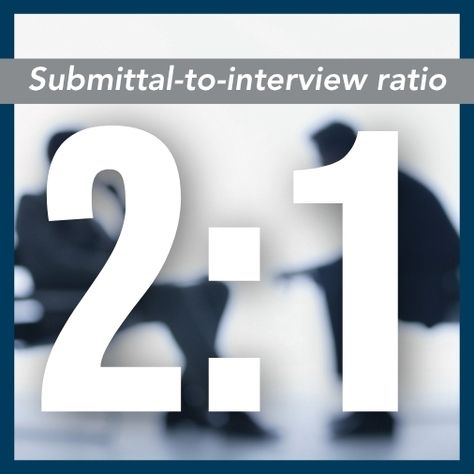
- Submittal-to-interview ratio of 3:1 or better
- Low 90-day fall-off rate (the share of placements that don’t last)
- Bad hire costing 30% of first-year pay (fall-off is a preview of the risk you’re taking on)
Red flags:
- Flood of resumes within hours of intake
- Metrics shown only as company-wide averages
Proof: Ask for submittal-to-interview and fall-off numbers on roles similar to yours. If they won’t share them, you have your answer.
2. How stable is the talent you place?
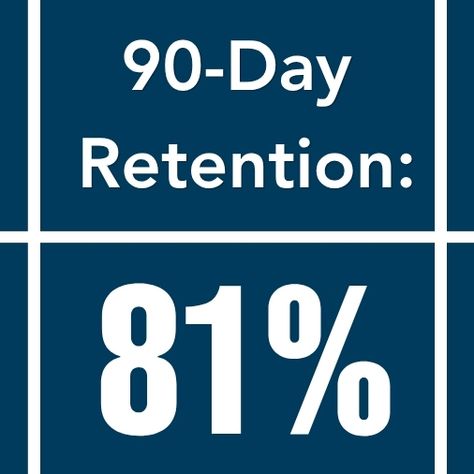
Retention is the difference between a teammate and a mid-project backfill. Roughly 30% of new hires leave within 90 days, about 20% within 45 days, usually due to weak onboarding or poor fit rather than skills.
Green flags:
- Firm can defend its rates of engagement-completion, 90-day retention, and redeployment
- Treats onboarding as a managed ramp with real knowledge transfer
Red flags:
- Company-wide averages
- No disclosed fall-off number
- A “we’ll just send a replacement” answer
Proof:
Ask how they support consultants after placement. A real consultant-care model gets described specifically, not generally.
3. How do you vet talent and manage compliance?
Most firms say candidates are thoroughly screened; fewer can show how.
Green flags:
- A multi-step process:
- Technical screening by someone who knows the stack
- Verified history and references
- Clear command of worker classification (W-2 vs. contractor), I-9/E-Verify, co-employment, and candidate data protection.
Note: Classification isn’t a detail. Up to 30% of employers have misclassified a worker, with exposure commonly $15K–$100K+ per person.
Red flags:
- No technical screen
- Vague classification answers
- No data-handling policy
Proof: Have them walk the vetting workflow end-to-end for a role you are hiring for.
4. How do you scale a team without dropping quality?
One great candidate is easy. The real test is lasting 8-60 days without lowering the bar. Technology roles already take ~62 days to fill vs. ~44 across all industries. A firm promising to beat that at volume is usually guaranteed to lower the bar.
Green flags:
- Honest pipeline depth
- Known ramp rate
- Willingness to say, “that timeline will cost you quality”
- Submittals that sharpen with every requisition rather than starting from zero
Red flags:
- Aggressive headcount promises with no quality trade-off
Proof:
Ask whether they’ve ever told a client a timeline was too aggressive, and what they recommended instead.

5. The Internal Question: Is this a partner you trust to represent your brand?
Every candidate a recruiter contacts experiences your company through them. About 72% of candidates who have a bad hiring experience share it, and most job seekers won’t apply to a company with negative reviews.
Green flags:
- Honest pipeline depth
- Known ramp rate
- Willingness to say, “that timeline will cost you quality”
- Submittals that sharpen with every requisition rather than starting from zero
Red flags:
- Generic outreach
- Oversold roles
- Ghosted candidates
- No interest in candidate experience
Proof:
Ask to speak with someone the firm recently placed and someone it chose not to submit. How both were treated is what your future applicants will feel.
An Honest Caveat
Some hiring is genuinely a commodity: high-volume, lower-complexity roles where speed matters more than precision, and a volume model fits. The five questions still apply; the answers just look different.
How Optomi Answers These
Optomi is a U.S.-based professional staffing firm built for specialized technology talent, and two things shape our answers:
Skillset-focused
Every recruiter is aligned with one of our six capability sectors, so the person sourcing your role understands its nuances: adjacent skill sets, what “senior” really means, and which credentials signal depth rather than keywords. That’s what makes disciplined submittal quality (Question 1) and sharper submittals over time (Question 4) real rather than aspirational.
Consultant-centered approach
A resume match is only the starting point. We screen for technical fit, cultural alignment with your team, and whether the role is one the consultant will stay engaged in. This is the direct answer to stability (Question 2), since early attrition usually traces to culture or engagement, not skills. A U.S.-based model also keeps classification, eligibility, and data handling simple (Question 3), and specialized recruiters represent your brand more faithfully than a high-volume desk (Question 5).
The Partner Who’s Already Answered
The old selection process rewards the best sales team, not the best talent operation. The partner who hands you real fall-off numbers, walks you through its vetting process, and introduces you to previous candidates has already answered the question before you finished asking it.
The right partner doesn’t just fill the seat. They protect your timeline, your team, and your brand.
Ready to see the difference a specialized IT talent partner makes?
Contact Us